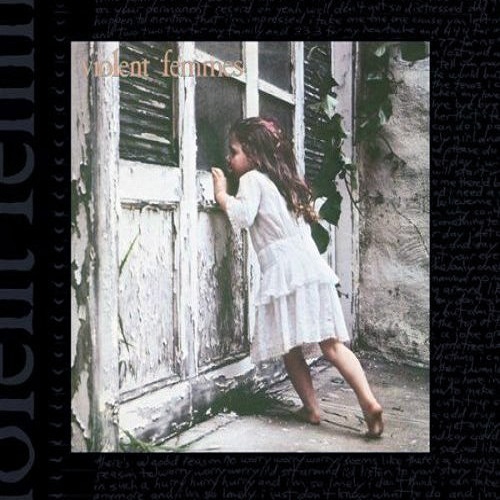
| Title | Violent Femmes 20th Anniversary |
| Year | 2002 |
| Labels | Rhino, Slash, Warner |
| Format | 2XCD |
| Length | 2:11:49 |
| CAT# | R2 78242, 8122-78242-2 |
Track Listing
- Blister in the Sun
- Kiss Off
- Please Do Not Go
- Add It Up
- Confessions
- Prove My Love
- Promise
- To the Kill
- Gone Daddy Gone
- Good Feeling
- Girl Trouble
- Breakin’ Up
- Waiting For The Bus
- Blister In The Sun
- Kiss Off
- Please Do Not Go
- Add It Up
- Confessions
- Prove My Love
- Ugly (UK Single)
- Gimme The Car (UK Single)
Disc 2 (Live Recordings)
- Special
- Country Death Song
- To The Kill
- Never Tell
- Break Song
- Her Television
- How Do You Say Goodbye
- Theme and Variations
- Prove My Love
- Gone Daddy Gone
- Promise
- In Style
- Add It Up
- Michael Feldman Interview
- Kiss Off
PRODUCERS NOTE
When I was 15, I recognized that there were two kinds of music. There was the kind that was made by and for people who liked clothes, dancing, and chatting up the opposite sex. That was not the kind of I listened to.
The rest of us, listen to music by and for people who didn’t fit in. We scattered to find something that rejected the Romantic Slow Jams, the Slick fashion, or the dance moves that composed, the music of top 40 radio. For some it was goth, or Punk, or the Safe Haven of our older brothers’ classic rock. But it was all just a different form of Conformity. I got caught up in the heavy metal crowd, conveniently Ignoring the idea that ripped jeans and concert t-shirts were just as much a uniform as anything worn by the cool crowd I ran from.
Violent Femmes saved me. There was no membership card, dress code, or initiation ceremony. They didn’t require us to be angry, in awe of them, to look like them, to talk like them. They were so completely on their own that they were scene-less. They made music for Misfit teenagers in its purist form because they themselves didn’t fit into any mold.
As we celebrate the 20th anniversary of their classic debut album, I still remember the day I first heard them. Someone began to shout over the Boombox that played in the back of the school bus: “I take one, one, one, cause you left me…” One voice Grew to four, then 10: “Eight, Eight, I forgot what eight was for…” Eventually, the entire back Half of the bus reached the crescendo: “ten, ten, ten, ten for everything, everything, EVERYTHING, EVERYTHING!”
There is a new busload of Misfits every year and this album Still speaks to them.
-Marc Salata
Rhino product management.
It might have been Their first record, but violent Femmes knew exactly what they wanted to accomplish with their self-titled 1983 debut album: they were shooting for nothing less than a classic. “We specifically intended to make this record so would sound out of time,” says Femmes bassist Brian Ritchie. “We wanted to make a recording that was American Music of any time. The album could have been released in the ‘60s, it could have been released when it was released, it could have been released Now.”
It certainly didn’t sound like any other music being made when the band formed in 1981. Back then the big thing was “new wave” an attempt by major record labels to house-train punk rock. While new wave was all synthesizers, drum machines, and highly processed vocals, Violent Femmes played on acoustic instruments; and since few clubs in town would have them, they often played on the sidewalks in Milwaukee. To a lot of self-styled hipsters around town, Violent Femmes were just massively uncool.
“There were times when we would be playing on the streets,” says Gano, “and people that we might know would cross to the other side and pretend like they didn’t even know us. Because it was just so embarrassing, what we were doing.”
The band’s Genesis began When in Milwaukee Theater owner advised Ritchie to “check out Gordon Gano-He’s a pint-sized Lou Reed imitator.” “I was a Lou Reed fanatic,” Ritchie says, “so that was all right with me.” So, he sought out Gano, who was still a senior in high school, and started playing music with him, soon enlisting, the services of his drummer friend Victor DeLorenzo, who had replaced a young actor named Willem Dafoe in the Milwaukee based experimental theater company Theater X. Ritchie dubbed the trio Violent Femmes.
They busked a lot, literally getting their act together and playing for spare change to the long lines of ticket holders at the Downer and Oriental theaters in Milwaukee. One afternoon they were playing for the crowd waiting to go into the Oriental to see the Pretenders when Pretenders guitarist James Honeyman-Scott saw them playing and got his entire band to come out and watch. Chrissie Hynde Invited them to play on the bill that night.
Every part of the band was distinctive. While Gano sketched out the changes on guitar, Ritchie’s hyperactive bass-he played an unusual acoustic model made for mariachi bands-ran rampant through the music. DeLorenzo’s kit consisted of a snare, a cymbal, and the “tranceaphone”
(A metal bushel basket upended over a floor tom), which gave things a street corner busker sound. DeLorenzo was not exactly Buddy Rich on the drums, “but he really had a sense of theatricality,” says, Mark Van Hecke, who produced the band’s debut album. “And that was key, that was absolutely key. The group never would have happened without Victor. In never would have come together.”
Gano, as he himself concedes, had his shortcomings too. “Someone once said my style is, I sing in between the notes,” he says laughing. But snarling abrasive and painfully vulnerable all at the same time. Gano’s voice spoke volumes about the wrenching uncertainty of post adolescence, while his lyrics as Ritchie puts it, showed Gano was “willing to sing about stuff that most people would think embarrassing, like something they might tell their psychiatrist but not their girlfriend.”
The music didn’t just Hark to proto-punkers like the Velvet Underground and Jonathan Richmond; It tapped into the same rich vein of primordial early rock ‘n’ roll that the original punks did-all the way back to the early Buddy Holly, Little Richard, and Elvis Presley, circa “the sun sessions,” all of whom rocked hard using mostly acoustic instruments.
The Femmes recorded a nine-Song demo at Van hecke’s home four-track Studio; Van hecke shopped it to various labels during occasional trips to New York City, but to no avail. Then the Femmes opened for Richard Hell & The Voidoids at New York’s Bottom Line and CBGB, and a buzz broke out on them, with legendary New York Times critic Robert Palmer devoting most of his review to a Rave about the opening band.
New York Rocker publisher Alan Betrock-whose label, Shake Records, had introduced bands like the Db’s, Marshall Crenshaw, and the Smithereens-offered to release Violent Femmes’ debuted album. Unfortunately, Betrock eventually had to back out, but not before the band had put down a substantial deposit for recording time. Rather than lose the money, they decided to go through with the recording anyway. There was only one problem-the band was totally broke. Very graciously DeLorenzo’s father, Victor Sr., loaned them $10,000 for the recording, despite the fact that they didn’t even have a record deal. “We were just very confident in the worth of our music and what we were doing,” says Gano, “and that somehow it would find an audience, and we would be good for that loan no matter how long it took.”
They had far too many songs in their repertoire for one album, but it was clear which ones would make the cut. “We knew the album had to have ten songs, and we knew which ten we were going to record,” says Ritchie. “We just thought these songs kind of belong together; they show a unified viewpoint, which was, what’s it like to be a fucked-up teenager?”
And the songs were united musically as well as thematically. “The decision was to try and have a flow, which it really does-Whole stretches could turn into a medley-and not to break it up with doing the more country type of material that we had,” says Gano, “that would take it musically into another Direction. We tried to streamline it, and that was a great decision.” All the material that didn’t fit on the first album wound up composing their next album, Hallowed Ground.
The band set about perfecting those 10 songs; there was no time to waste in the studio, so they would record them exactly as they played them live.
The sessions took place over a week in July 1982. Van Hecke would pick up the band in his decrepit Chevy Nova and drive them out to the Castle Recording Company in Lake Geneva, Wisconsin, a resort town an hour’s drive from Milwaukee. Castle, located on the grounds of functioning Resort complex, was a 1970s state-of-the-art studio that had gone to seed-the carpets were dirty, and much of the equipment was in despair. The studio was in such rough financial straits that equipment was sometimes repossessed before the band got a chance to use it. Still, it was a nice, big room, acoustically “dead” and blessed with an ample Supply of excellent vintage microphones. It was a 24-track studio, but since the band could only afford two rolls of tape, they sometimes used only 12 tracks per song in order to double the recording time. But most of the time they use just eight tracks to qualify for the lower hourly rate.
Every day they’d step out of the summer heat and into the refrigerated chill of the studio; DeLorenzo, Gano, and Ritchie set up in the middle of the room, separated by acoustical partitions called Gobos, and played simultaneously, while Van Hecke, and engineer Glen Lorbiecki looked on. There were few overdubs and no “punch-ins,” which meant that everyone in the band had to play the song correctly at the same time, all the way through. And that didn’t happen very often. “The band was pretty new and would have a lot of breakdowns during performances-strings would break, people would forget where they were, things like that,” Van Hecke recalls.
Sometimes outside circumstances would intervene, though. The room where the band played had a window that looked out onto a path bordering the resorts golf course. “These chefs would keep driving by in these golf carts in all their chef regalia, and in the back of one of these golf carts was a suckling pig with an apple in its mouth, and we just laughed like crazy,” DeLorenzo recalls. “It broke up a couple of takes because Brian and I were laughing so hard.”
“But we were so concerned with the hourly rate that it kind of bummed us out,” Ritchie adds. “’We just lost ten minutes of recording time because we were laughing at that suckling Pig!’”
Sometimes it took as many as a dozen tries before the band got a keeper performance, but really, musical proficiency was beside the point. “There’s never any point in time when the vocal and all the instruments are right in tune,” says Gano. “But that first record, I’m struck by the overall sound of it and the energy of it. There’s something that’s really, so alive and so different from other things at that time, and really from most anything. It just has a different sound to it, and it’s very exciting.”
Whenever there was some downtime, Gano, who was still only 18 years old, would sit on the studio office floor and play a baseball board game.
Van Hecke started to mix the album by himself, but the band felt his first efforts were too slick. “We wanted to have it sound real,” says Gano. “If there was a squeak on the acoustic instrument, that’s part of how the acoustic instrument sounds. We weren’t at all concerned with making it smoother.” After that, the band sat in on the mixing sessions. “I don’t think that takes anything away from [Van Hecke] at all,” Gano says, “it just means that it really was a collaborative effort.”
Although the recording sounds very straightforward, there was some fancy Studio footwork involved. The band members were still pretty green and didn’t know when to lay back and let someone else shine for a moment, so there were lots of quick mixing moves to keep the focus on the right instrument at the right moment. All that Studio time eventually used up their budget, but sympathetic mix engineer John Tanner saved the day by sneaking the band in during off hours so they could finish the recording.
With its catchy fanfare of an opening riff, “Blister in the Sun” was the obvious opener; The band always opened Its show with the tune too. “Confessions” was a good way to close down Side One, while “Prove My Love” was a rousing Start to Side Two. The pensive “Good Feeling” was the clear finale, says Van Hecke, “It says, ‘We take this seriously, and this is borne out of love. Yeah, we’re angry, and we feel powerless, but we really believe it.’”
The finished recordings went out to yet more record companies. One label liked the tunes but wanted the band to record the album with full drum kit, keyboards, and a hotshot producer. The band said no. A tape made it to the L.A.-based Slash label, then red-hot with bands like Dream Syndicate, Fear, and The Blasters. Slash A&R person Anna Statman loved the record and urged the label to put it out as-is. Violent Femmes’ debut album was released on Slash in January of 1983.
Violent Femmes sounded nothing like the Ramones, but it made a very important point about punk rock: you don’t need light-speed tempos and distorted electric guitars to do it. It’s all in the attitude. Like so many of their musical Heroes, Violent Femmes hollered a resounding “No” Into the prevailing social and musical winds of the time. “That record is very threatening in the most non-threatening way,” observes DeLorenzo. “We delivered that strange underbelly that some people like, but, at least on the surface, it was delivered with more of a cheery kind of Midwestern aspect to it. It didn’t have any of the degradation of the New York City or the Los Angeles style of things. And that’s what I think made it even more deviant and alluring for some people. Or more accessible.”
“We sure thought we were making a classic album when we were making it-we had no doubts about that,” Ritchie says. “But we had no idea whether that would lead to any kind of success, because we’d seen classic albums like [Television’s] Marquee Moon, and nobody cared” And yet the album was a hit, As Ritchie once quipped, just not all at once. The femmes’ debut has wound up being passed down through sub-generations of college and post college types ever since it came out. For aspiring Collegiate bohemians, It’s still right up there with clove cigarettes, thrift-store clothes, and Naked Lunch.
Even though the Femmes felt they were making a classic, no one could have known that nearly 20 years after its release, sales of their album would be closing in on the two million mark. Then again, DeLorenzo seemed to have sensed the record’s enduring influence right from the start. when the first box of Violent Femmes records arrived at his house, His first child, his son Malachi, had Just been born. DeLorenzo held the baby as he opened the box and held up a copy. Wow, he thought to himself, here’s the future right here In both my hands.
-Michael Azerrad.
Violent Femmes on Violent Femmes, Track by track.
Blister in the sun
Gordon Gano: I wrote this for a girl who said she wanted to start a band “Like the Plasmatics.” I never saw her again and was told she shaved her head and joined a cult and Canada. Occasionally I would write “I” when I meant “a”- That’s how the line became “Let me go on Like I blister in the sun.”
Brian Ritchie: The first time Gordon, Victor, and I played together was at a coffee house in Milwaukee. We did so without any rehearsal, so we were hearing the songs for the first time. After starting up the bass Riff, Victor spontaneously responded with the “da da da da” drum fill, which proves the hypothesis that in music your first idea is usually the best. Recently I enjoyed a Milwaukee Brewers game at their new Stadium, and they used the bass and drum intro as fanfare over the PA. I was highly amused.
Victor J DeLorenzo: First of all, Gordon wrote a whole style in just that one song. And it’s got a magnificently beautiful urgency that Gordon delivers in his lyric and his vocal performance. I can remember hearing the riff for the first time and being compelled to play the “stutter flams” on the snare drum. The tranceaphone and bass really drive the album version… featuring my six and a half inch deep, Tony Williams inspired Gretch, snare drum.
Kiss off.
BR: Our original concept was to play acoustic instruments but generate the same musical intensity as a full-throttle electric band. The improvisation in the middle of the piece and the acoustic feedback (don’t try this at home, Kids!) at the end are some of our most successful examples of that theory in action.
VJD: When we would play the song Live in the early days, the improvisational aspects could sometimes rage on for nine minutes or more; we were in for the long haul.
GG: Very few people said this, then or now.
Please Do not go
GG: My reggae phase
BR: I was in Italy, and a journalist from one of the guitar magazines there approached me with notation of this tune’s unaccompanied bass solo. He asked me to verify that he had transcribed It properly. I looked at the magazine, furrowed my brow, ran my finger along the staff lines, and gazed in the air while the journalist stood there in nervous anticipation. I pronounced my verdict: “I don’t know. I can’t read music.”
VJD: Peter sellers and Spike Jones could have done a good cover of this one. One of our many audience-antagonizing numbers, I remember laughing at Gordon because of the great lengths we would go to twist the “bye-Bye” vocals way beyond what was called for. Is it slightly embarrassing?
Add It Up
GG: One day Brian said to me that we shouldn’t play this song anymore. Why? Because it’s musically boring. Why? Because it only has two chords. I refused to stop playing it, and it was “grandfathered” in because I was playing it before we were a band. I think the “rap” was inspired by Blondie’s “Rapture” And the Trashmen’s “Surfin’ Bird.”
VJD: Great dynamic playing by us all; makes me proud that we had big ears and only kept the recorded version. This was a show closer that never failed to excite the audience into a state of rabid distemper, kind of like a bunch of wild possum on feed night.
BR: Numerous people have told us they lost their virginity while listening to this song. I can think of better options, but it’s flattering, I guess…
Confessions
VJD: Swirling brushes, coiling bass, and someone whispering in your ear about worry. I used my Gretch drum set on this track. A well-earned plaintive ending to a song that makes me think of rainy night a long time ago.
BR: This song is a good example of the extreme dynamics (variations in degree of loudness) that the early Femmes were capable of. Our theory was that to play extremely quietly at times allowed the loud passages to have even more impact. Around the time we made this album we played a “Battle of The Bands” The judge was a DJ from the local “heavy rock” radio station. After we lost, he told us “You guys have more dynamics than any band I’ve ever seen since the Doors!!!!, You were the best band, but if I voted for you, I’d lose my job.”
GG: I don’t even want to hear about my confessions
Prove My Love
VJD: the song starts with what I call in my mind the “Femmes beat.” That beat was one of my early experiments with rock brush techniques, as in “How do you steer an aggressive band with one snare drum and a pair of brushes?” Features Brian and I on stunning background vocals. (Sheesh, what were they thinking?!)
BR: The odd expression “Third verse, same as the first” is an homage to an early Herman’s Hermits tune. That’s good example of our habit of taking obscure bits and pieces of pop music trivia and placing them in the middle of our own songs, much in the same manner that a bird might use gum wrappers and pieces of Kleenex when building a nest.
GG: The Rhythm guitar solo came from playing on the street and trying to make the acoustic guitar loud and contrasting enough to be heard.
Promise
BR: The song used to have a weird spoken-word interlude that was removed because a lot of people thought it was offensive, or Gordon thought it was stupid, or both. I wish we had a tape of that!
VJD: I always felt that the album got very serious at this point. This song and the next cut show more of our teeth, the side of the group that made me feel that we could make the jump from Milwaukee to anywhere and not be afraid.
To the kill
BR: The disjointed antirhythms and atonality of the introduction of the song is an expression of our commitment to incorporating free improvisation elements into the structure of the songs. Victor and I had always played this way, but Gordon didn’t “get it” until we took him to see Sun Ra.
VJD: Another signature song. Who else but VF sound like this?
GG: I played this at a local downtown disco where I was semiregular for a talent-night competition. What was I thinking? I got second place.
Gone Daddy Gone
GG: I wrote this about Stefanie Jackson at Rufus King High School. There, I said it.
BR: it’s been well-documented that we used to “busk.” We didn’t know this terminology at the time. We called it “playing on the street.” Anyway, there was an occasion when Victor was not available, so Gordon and I hit the street seeking spare change. Instead of bringing my bass, I grabbed the xylophone. Gordon played this melody, and I came up with this embryonic version of the xylophone part. That’s the origin of “Gone Daddy Gone.”
VJD: Our big production number. I always liked the way that my voice mixed with Gordon’s. I like the Jazzy trades. Brian shows his mallet talent on the xylophone.
Good Feeling
BR: We come from the mindset of the 60s, as music listeners. One of the characteristics of that time is the idea of ending albums (as they were called then) With a beautiful ballad. That’s what we try to do here. Later on, when the album was reissued as a CD, the record company added “Ugly” and “Gimme the Car” as bonus tracks, and our original intent was thwarted in pursuit of commercial goals. Whole generations of listeners grew up listening to the album with a misunderstanding of how we intended to resolve. So, listener please be aware that the album officially ends NOW.
VJD: Gordon has written a song that has haunted me for years, and it is this one. The atmosphere of the original recording suggests a nervous calm that can’t quite cope with its own delicate nature. A vague sketch of a fantasy, If you will. One of Gordon’s most beautiful lyrics.
GG: There was a bad psychedelic poetry part in the bridge which was thankfully omitted before recording and ever after.
Disc 1
Original Album
- Blister In The Sun
- Kiss Off
- Please Do Not Go
- Add It Up
- Confessions
- Prove My Love
- Promise
- To The Kill
- Gone Daddy Gone
- Good Feeling
Tracks 1-10
From the original release of Violent Femmes
Slash #23845 (1/83)
Produced by MARK VAN HECKE
Engineered by GLEN L LORBIECKI & JOHN TANNER
Recorded at CASTLE RECORDING COMPANY, Lake Geneva, WI (7/82)
Demos & More
- Girl Trouble
- Breakin’ Up
- Waiting For The Bus
- Blister In The Sun
- Kiss Off
- Please Do Not Go
- Add It Up
- Confessions
- Prove My Love
Tracks 11-19
(Track 13 first issued on the album Add It Up (1981-1993)
Slash/Reprise #45403 (9/93) * All other demos previously unissued)
Produced by VIOLENT FEMMES
Engineered by MARK VAN HECKE
Recorded at MARK VAN HECKE’S HOME STUDIO, Milwaukee, WI (Fall/1981)
- Ugly
- Gimme The Car
Tracks 20-21
Rough Trade [UK] single #147 (12/83)
Produced by MARK VAN HECKE
Recorded at MUSIC WORKS, London, England (8/31-9/1/83)
Disc 2
Live Recordings
- Special
- Country Death Song
- To The Kill
- Never Tell
Tracks 1-4
(Track 1 first issued as a flexi-disc in Alternative Press Magazine * All other Selections previously unissued)
Produced by VIOLENT FEMMES
Engineered by VICTOR DeLORENZO
Recorded Live at the BENEATH-IT-ALL CAFE, Milwaukee, WI (9/12/1981)
- Break Song
- Her Television
- How Do You Say Goodbye
- Theme and Variations
Tracks 5-8
(Previously Unissued)
Produced by VIOLENT FEMMES
Engineered by VICTOR DeLORENZO
Recorded Live at THE JAZZ GALLERY, Milwaukee, WI (12/8/81)
- Prove My Love
- Gone Daddy Gone
- Promise
- In Style
- Add It Up
Tracks 9-13
(Previously Unissued)
Produced by VIOLENT FEMMES
Engineered by EDWARD HABER & ILANA PELZIG CELLUM
Recorded Live at FOLK CITY, New York, NY (1/26/83)
- Michael Feldman Interview
- Kiss Off
Tracks 14-15
(Previously Unissued)
Produced by VIOLENT FEMMES
Engineered by MICHAEL DeMARK
Recorded Live on the program High Noon, WHA Radio, Madison WI (2/6/82)
Gordon Gano: guitar, violin, lead vocal
Brian Ritchie: acoustic bass guitar, xylophone, electric bass, nose flute, vocals
Victor DeLorenzo: snare drum & tranceaphone, drum set, scotch marching bass drum, vocals
With:
MRK VAN HECKE: piano on “Good Feeling”
All songs written by Gordon Gano (Gorno Music – ASCAP) except “Break Song” by Brian Ritchie & Victor DeLorenzo (Humidor Music/Defendimusics – BMI) “Theme And Variations” by Brian Ritchie (Humidor Music – BMI)
Original Album
Package Design: JEFF PRICE
Front Photo: RON HUGO
Back Cover Design: LAURIE LINDBLOM & GEOFF “STINKY” WORMAN
Thanks to: ROBERT MUNGER, BRYAN KING, 4TA & THE BONE
Special Thanks to our friends who are no longer with us: JAMES & CHRISTINA
Reissue Produced for Release by: VICTOR DeLORENZO & BRIAN RITCHIE
Executive Producer: MARC SALATA
Remastering: DAN HERSCH & BILL INGLOT at DIGIPREP
Analog to Digital Transfers: MALACHI DeLORENZO at jOeS’ real recording, Milwaukee, WI
Discographical Annotation: REGGIE COLLINS
Editorial Supervision: SHERYL FARBER
Liner Notes Coordination: TIM SCANLIN
Editorial Reserch: STEVEN CHEAN
Reissue Art Direction & Design: MARIA VILLAR
Group Photos: GEORGE LANGE
Cover Model: BILLIE JO CAMPBELL
Project Assistance: ROBIN HURLEY, APRIL MILEK & RANDY PERRY
Rhino would like to thank: JAMIE KITMAN, MICHAEL FELDMAN & MARK VAN HECKE
A very special thanks from the band to their families and once again: ROBERT “MR NEW WAVE” MUNGER, AND THE BONE, FRED & LYDIA ABITZ, GLENN GANO, PUL CEBAR.
Management: JAMIE LINCOLN KITMAN, THE HORNBLOW GROUP USA
Booking: FRANK RILEY, HIGH ROAD TOURING
Business Manager: HOWARD COMART
Fan info: www.vfemmes.com
www.victordelorenzo.com
R2 78242
This Reissue/Compilation (P) & (C) 1982 Slash Records. (P) & (C) 2002 Rhino Entertainment Company.
10635 Santa Monica Blvd, Las Angeles CA 90025-4900.
Warner Music Group, an AOL. Time Warner Company. Printed In U.S.A.
* www.Rhino.com
Original Recordings Produced by Mark Van Hecke & Violent Femmes
Reissue Produced for Release by VICTOR DeLORENZO & BRIAN RITCHIE